- No products in the cart.


Joint Press Conference – Master Builders Australia, Housing Industry Association, Property Council and Real Estate Institute of Australia.
March 23, 2026
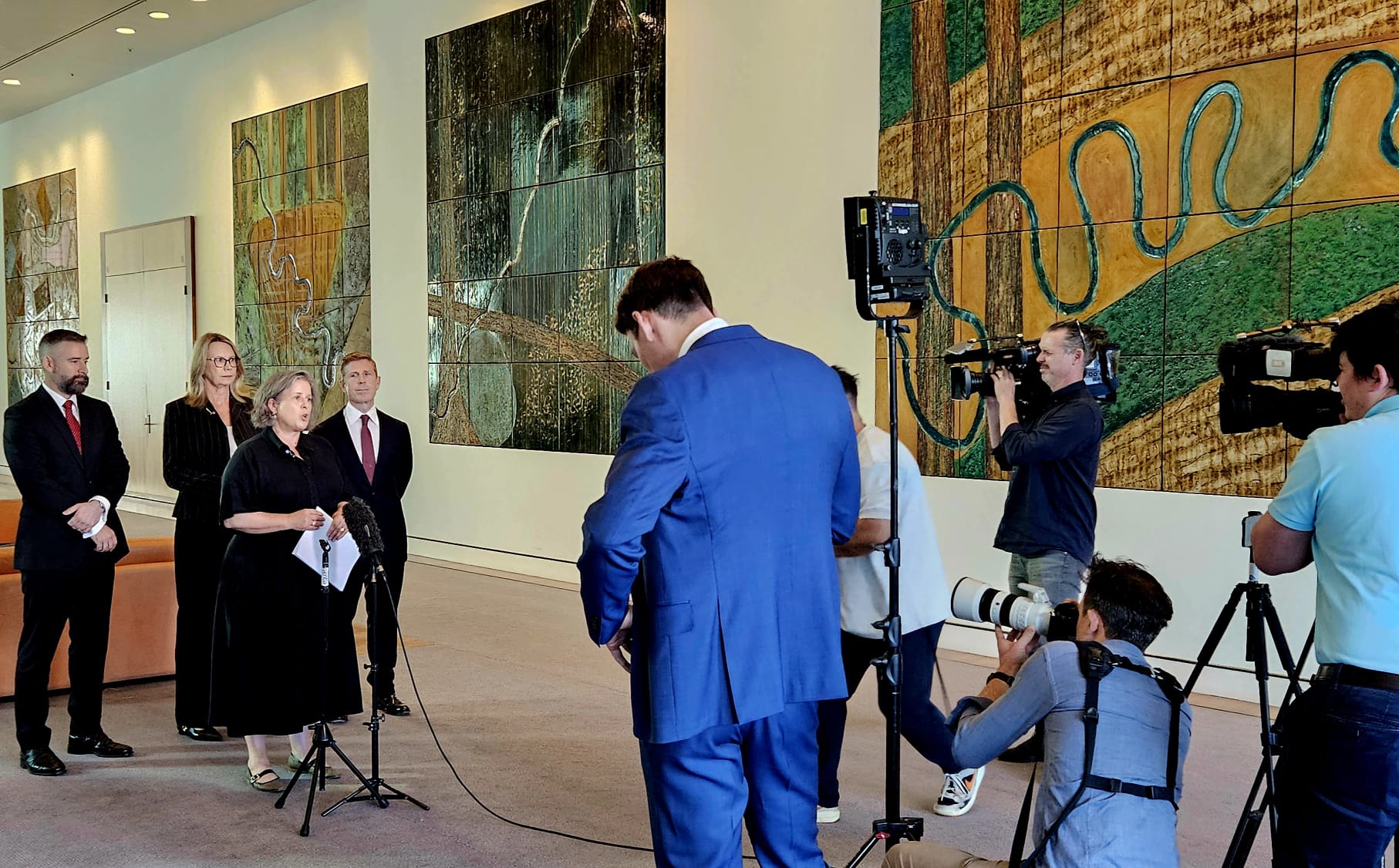
Event: Joint Press Conference – Master Builders Australia, Housing Industry Association, Property Council and Real Estate Institute of Australia.
Date: 23 March 2026, 8.30am AEDT
Location: Mural Hall, Australian Parliament House.
Speakers:
Denita Wawn (Master Builders Australia, CEO)
Jocelyn Martin (Housing Industry Association, Managing Director)
Jacob Caine (Real Estate Institute of Australia, President)
Mike Zorbas (Property Council of Australia, CEO)
Topics: CGT Discount, Federal Budget, National Housing Accord, Housing supply policy settings.
E&OE
Denita Wawn, CEO Master Builders Australia: Good morning. Denita Wawn, CEO Master Builders Australia, today I am joined with representatives from the Housing Industry Association, the Real Estate Institute and the Property Council of Australia. We’re releasing a report into the policy impacts on housing, and it’s a focus on capital gains tax and negative gearing. There are rumours abundance in this house to talk about a tax hike on property at a time where we can least afford it. We’ve seen from a Senate Committee Inquiry last week that there is a push, a strong push, to create a reduction in the Capital Gains Tax Discount, which will result in a tax hike on property at a time when we are actually focusing on supply.
The report that we are releasing today shows that whatever way you cut it, any time you do a tax hike on property, you reduce the supply of our homes. That is not fair to our rental market. It is not fair to the focus on building supply at a time when we need to be focusing on uplift. We are saying, as a group of concerned industry associations that the government should not change the tax settings that means a reduction in the supply of our homes. I now call upon my colleagues to say a few words, and then we’ll be available for questions. Thank you.
Jocelyn Martin, General Manager Housing Industry Association: Good morning everyone, I’m Jocelyn Martin. I’m the Managing Director of the Housing Industry Association. It’s well known that Australia is facing a housing crisis, and that is because we are not building enough homes. Treasurer Chalmers seems unwilling to rule out a change to the Capital Gains Tax Discount. We know that two in five properties of new homes built in this country are built by investors. We can ill afford to see those investors leave the market for more attractive options. We also know that 70 per cent of homes are built by investors, by people, ordinary people who have one to two homes. Those are people who are already being affected by interest rate increases and cost of living. We know that rental occupancy rates in this country are at an all time high.
That means that there is extraordinary pressure on rental prices, and renters have no choice. If we do not build enough homes, rent prices will continue to increase. 42 per cent of the cost of a new house and land package in this country is already made up by fees, taxes and charges. We can ill afford to make increased tax settings on our housing market. Our report shows that Capital Gains Tax Discount changes will have a negative impact on GDP, on employment, and also will decrease housing supply. Thank you.
Jacob Caine, President Real Estate Institute of Australia: Good morning everyone. Jacob Caine is my name. I’m the president of the Real Estate Institute of Australia. The modelling released today makes one point very clear, that increasing tax on housing decreases supply. Now, whether that’s changes to Capital Gains Tax or negative gearing, ultimately, what that translates into is fewer homes being built, fewer jobs in construction, and most significantly, an increase in rents. In Australia, we find ourselves in a structural housing deficit. The National Housing Affordability and Supply Council has forecast that we are falling dramatically short of the National Housing Accord targets, and that year on year, that deficit is growing. Across the country, in every state and territory, our rental vacancy rates are sitting at catastrophically low levels. Now in the context that we find ourselves in right now, any policy change that would risk reducing the investment in and supply of housing is inherently problematic.
In that context, the inescapable consequences of higher property taxes are that rental home availability decreases, rents increase, and that those in our community who can least afford the extra burden bear that burden, and they are renters. The Real Estate Institute of Australia’s position is not that our tax system is perfect. It is, however, that changes to housing tax must occur only after, not before the structural supply issues are addressed. We must first tackle planning constraints, infrastructure charges, construction productivity, workforce challenges and regulatory duplication. This is not about defending any one group, but it is about ensuring that all Australians have access to affordable, safe and secure housing, whether you rent or own at a time when Australia needs more homes, not less. All policy positions and settings should be focused on increasing supply, not constraining it.
Mike Zorbas, CEO Property Council of Australia: Mike Zorbas, I’m the CEO of The Property Council of Australia. The simple fact is this, we won’t get more supply of new homes in this country if we hike taxes on investment in that supply. Two in five of every new home in this country are supported by the fundamental investment made by investors. That matters in the big cities and that matters in regional areas. If you shrink supply by hitting investors, you eventually end up hitting renters, whether they’re current renters, who suffer because rental prices immediately go up to cover the cost of the tax, or more likely, with suppliers withdrawn because investors are attracted into the stock market, which is taxed at a preferential rate. The end of the story is that current and future renters pay more, and it’s a tragedy when you reflect on the fact that the critical role of investors in these markets is absolutely essential to building, in particular, new apartments.
So, if you want to reduce the number of cranes in the CBDs around Australia that support jobs and support our economies, then go ahead and add to the 30% taxes that we already charge on new homes and make sure that those apartments never get out of the ground. The fact is this, intergenerational equity in this country is best served by a radical increase in the supply of new housing. Australia is 100 homes per 1000 people behind the average of other advanced economies. How we got here is not the fault of investors. It is in fact, very much at the feet of three generations of Parliamentarians at a federal, state and local level who have not supplied enough housing. We only have 400 homes per 1000 people. That is absolutely execrable for a nation that has a very low population and a very large land mass. So, I ask the Federal Government, I ask the Federal Cabinet, I ask the National Cabinet to redouble their very welcome commitment made a couple of years ago to increase supply and increase the zoning and the approvals processes for new housing. That is the key to intergenerational equity in the housing market in this country.
Denita Wawn, CEO Master Builders Australia: Thank you. All four of these organisations are committed to increasing supply. We are all committed to the housing accord target of 1.2 million homes. We want to be talking in this Parliament about increasing supply, not decreasing and a particular moment in time where our supply chains are already constrained, particularly in terms of diesel, where the enabling infrastructure that is so important for us to meet supply demand is going to be curtailed if we see the ongoing dwindling supply of diesel. The focus needs to be on supply, increasing it, not decreasing it. Thank you.
Media contact: Dylan Hafey, Media Advisor
0497 330 064 | dylan.hafey@masterbuilders.com.au