- No products in the cart.


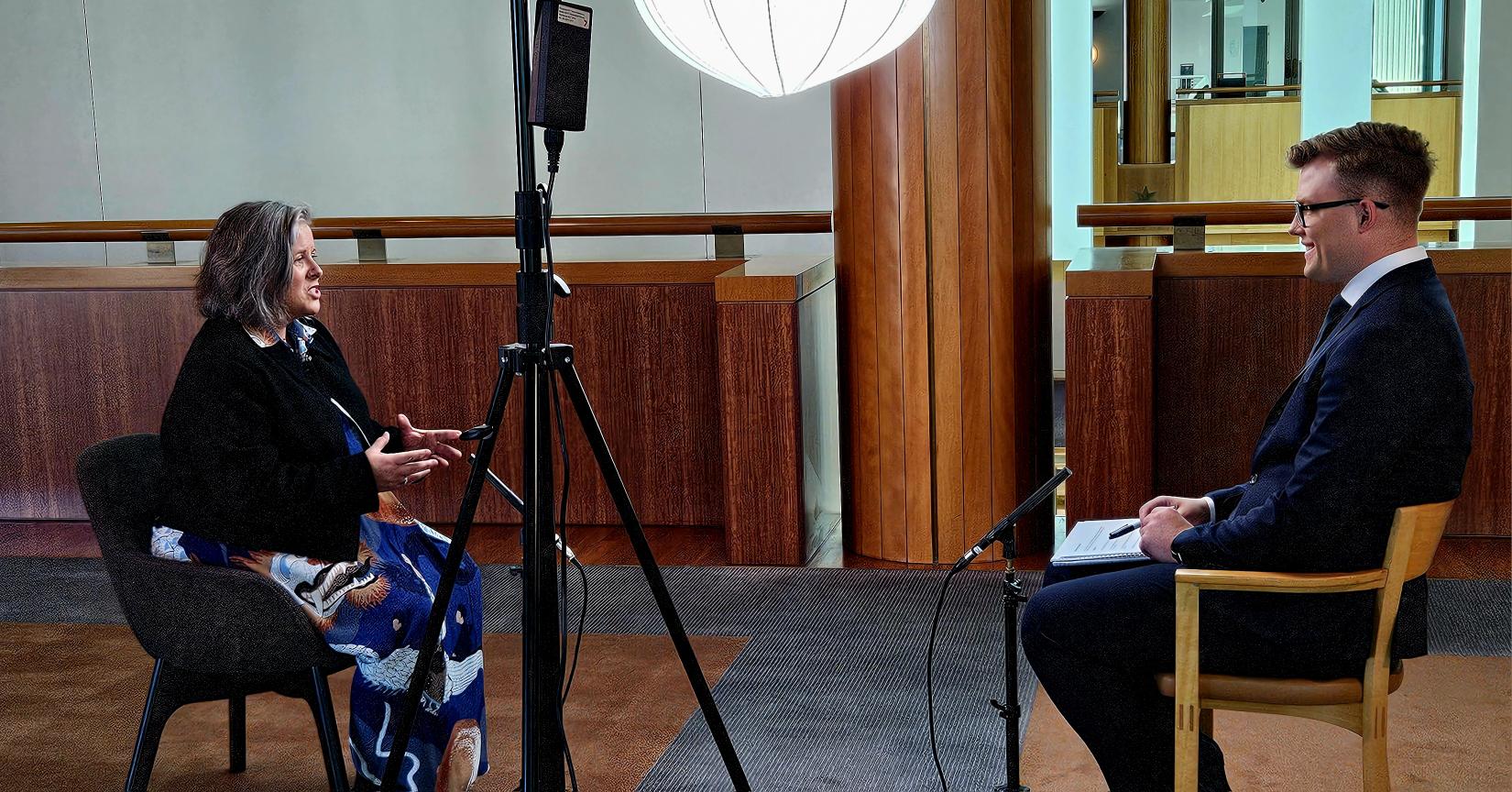
Event: Interview with Josh Martin, The Issue Podcast, 7News Australia
Date: 18 July 2026, 5.30pm AEST
Speakers: Denita Wawn, Master Builders Australia CEO
Topics: Current state of the building and construction industry, workforce shortages, interest rates, the Federal Budget and the criminal conduct of the CFMEU.
The full podcast can be viewed and listened to here, with the transcript below.
E&OE
Josh Martin, The Issue Podcast host (Editorial): Is the Government’s tax agenda helping or hindering? And what would another rate hike do to building targets? In 2017, Denita Wawn broke through the glass ceiling here in Canberra, becoming the first ever female CEO of Master Builders Australia. That’s the lobby group that lobbies the Government on behalf of builders. Her time in charge has been a roller coaster ride. Denita Wawn has witnessed the housing crisis, union corruption, received death threats, and even seen Labor break its key promises on property taxes. For her take on these issues and her solutions today, Denita Wawn is tackling the issue.
Host: Welcome to the issue, Denita.
Denita: Thank you.
Host: You’ve been the CEO of Master Builder since 2017, the first female CEO. What’s it been like to lead a sector typically dominated by men?
Denita: It’s really been interesting over the span of the 10 years. I was the first female CEO, the only female around the board table, around the state and territories’ table. Now that’s quite different. We now have a significant number of our state leaders are also women. We have more women on our board, but more importantly, we are actually finally seeing an uptick of women in the industry. It is so vital that organisations like ourselves lead by example and ensuring that people see role models when we’re trying to change culture of an industry. There’s still a long way to go. We do not have enough female tradies. For example, it’s wallowing on 4 per cent, I think it was about 2 per cent when I first started. Simply not good enough. So, some great inroads, but too slow from my perspective. Like to see a lot more women in a really vital industry and an industry where there is just so many job opportunities.
Host: Yeah, what percentage would you like to see it get to?
Denita: Well, I would love to see a number of whatever working population we have of women, then they are represented accordingly. Whether that’s 50 per cent, 45 per cent, doesn’t really matter, but when we’re sitting in the teens and when it comes to the trades, single digits-that’s simply not acceptable and we’re working at the moment on a program called Level the Site, and we’re about to go into market with a whole stack of advertising around changing the culture on our building sites. So, we’re looking after everyone, not just women, but actually, it’s a respectful workplace where we are supporting one another, including women, trying to get a foothold in the industry.
Host: … What’s the current tradie shortage?
Denita: It’s huge. It’s absolutely huge. We’re estimating that we need around about 115,000 extra people in the residential sector alone. When you then consider commercial and civil works, and that includes the Olympics. Then we need about another 300,000 odd workers. So, nearly half a million extra people in an industry that employs 1.4 million. So, that’s a significant jump in the numbers of people we have, and unfortunately, part of the reason why construction is so costly at the moment and it’s slow is in part because we simply do not have enough skilled people working in the industry.
Host: Yeah, how much is the lack of tradies actually adding to building costs? Is there a number like if we had that half a million more workers, how much lower would costs be?
Denita: It is still something we’re trying to work out, but we know it can be anywhere between 10 per cent to 15 per cent of those costs attributed directly to the shortage of workers, and it’s in part two ways. One is because we’re paying higher rates because demand is so high, but also when you cannot get tradies working in tandem in a sequenced way, then you have lag times on a site. And any day where there’s not activity, then that means additional holding costs. So, a house, for example, pre-COVID used to take on average about eight or nine months to build. The average is now about 11 or 12 months, and we blew out to 15 months. That is because, in part, we don’t have enough people, and that means costs escalate accordingly.
Host: How many tradies are we training in Australia? The Government’s banging on about free TAFE.
Denita: Yeah, we’re seeing around about 100,000 apprentices. That is the lowest in five years, unfortunately, in building and construction trades. We’re not seeing a significant number actually complete their trade. It’s still sort of sitting around, unfortunately, about a 50 per cent retention rate. We do get better results when we look at Group Training Organisations, but nevertheless, we need more. It’s simple as that. We’re not seeing enough people, whether they are men or women, enter into an apprenticeship. We say more needs to be done. It was really disappointing during the Federal Budget that the Treasurer announced a decrease in the Key Apprenticeship Program for 2027. That was something that took us by surprise. The Government had committed to the Key Apprenticeship Program, but they’ve reduced the amounts that will go to employers to try and incentivise them to put on more apprentices in 2027. That’s contrary to the intention of the Government. So, we’re pushing really hard for greater support of apprentices, whether they start after school, whether it’s mature age apprentice, or making sure we get more people in school-based apprentices. I know I’ve got my youngest son currently is in his second year, year 12, doing a school-based apprenticeship. It has been phenomenally a great opportunity for him. Two days a week with his apprenticeship, three days still at school doing English and maths, still being part of the school community, and he will come out of that nearly if you know been at least halfway on his apprenticeship, and that’s a really exciting opportunity for young people.
Host: What was the reduction in the budget for the key apprenticeships. How much lower is the amount?
Denita: It’s gone down by a couple of $1,000 so that is significant. Particularly when you look at a first-year apprentice, you are paying them a wage to train, but unfortunately, they are basically not that helpful. They are learning. They are shadowing competent people and can’t really contribute to productivity. So, for us, it is really important to incentivise not just the apprentice but also the employer as well. Particularly in those first few years, where they are doing a lot more training than actually on-the-job work that is contributing to the productivity of that site.
Host: What about skilled tradies from overseas? Is the Government doing enough to bring them in?
Denita: Absolutely not. The Federal Government needs to be doing more in this space. We’ve really seen a decline in the number of skilled migrant tradies coming into Australia. It’s in part because of the cumbersome, costly process that we have. They are not given a priority status in comparison to other types of qualifications. We are competing in an international market. If you look at New Zealand, Canada, and the UK, they all have specialist tradie pathways that are streamlined, far more cost-effective. We have been asking that of the Federal Government for quite some time. We’re also suggesting expansion of the Pacific Island Workers Scheme from horticulture into building and construction as well. We’re having some good conversations with the Federal Government about that, but more needs to be done in that space. I think only 5 per cent of new entrants into our industry over the last 10 years have been migrants, and that is in comparison to previous times where it’s been as high as 20 per cent. So, we need to shift the dial when it comes to encouraging more skilled workers into this country and focusing on the work that we actually need to be done.
Host: Tradies are currently on tier three of the skilled migration list. Would you like to see them go to tier two or tier one?
Denita: We would love to see them on tier one, but at least tier two. But for us, we actually say that we need a specialised approach to tradies. It becomes cumbersome when you look at also the licensing regimes that are all different around the country, and also skills recognition. So, they should at least be tier two at the very minimum, but we would like to see more effort, more resources for a streamlined, fast track pathway for tradies.
Host: There’s a big debate going on politically on migration. Pauline Hanson says we should cut net overseas migration to 130,000. What would that do to the construction industry, if we had so few people coming into the country who are skilled.
Denita: Master Builders recognises that there is a lot of pressure in the community at the moment around housing, and part of that is: are we bringing too many people into Australia because of our shortage of housing? We understand and sympathise with those concerns, but from our perspective, our focus is on skilled migration, not the broader migration debate. For us, we think it is critical if there is any consideration by any Government or Opposition, and they are developing their policies, they’ve got to focus on what is needed to ensure the effective productivity of this country, and what are the skills that we need to ensure that we’re looking after all Australians? So, of course, we need more health workers. Of course, we need more aged care workers, and we also need though more builders because if we’re going to build all the homes we need, the schools, the hospitals, the Olympic infrastructure. We know we need more people. That needs to be the focus of our migration system in this country.
Host: Is the issue with the migration system that such a big proportion of the numbers are family of skilled workers that it reduces how many skilled migrants you can actually bring in?
Denita: Yeah, we were really shocked that research that was recently provided in the public arena that many of those coming under the skilled migrant banner are actually not skilled workers; that they are family members. We think that is totally disingenuous when it comes to really understanding exactly how many people we are getting. So, for us, there needs to be a differentiation. We need to clearly articulate publicly how many skilled workers we are getting in here, and then separately account for any of their family members. Of course, family members need to come with a skilled migrant. That’s a critical part of the change of coming to our country, but we need to be upfront and transparent on exactly the numbers that we are bringing into Australia when it comes to meeting those shortages. And I stress again, we need 115,000 odd extra just in residential, and nearly 300,000 odd for commercial and civil infrastructure.
Host: Are you planning to get more research or run a campaign to boost your argument around the need for more skilled tradies?
Denita: Certainly, we are looking at releasing very shortly a workforce blueprint that goes into quite some detail, not only of identification of the problem but also some recommendations of what government should be doing when it comes to increasing our workforce to meet all of these built environment needs. We will, in due course, when we release that, put that into the public arena, so we can really have a proper debate about what are the migration settings required in this country to ensure that we’re meeting the real needs of the country.
Host: … AI is a big debate at the moment. The Government’s recently released a report on which jobs are most affected, and it found tradies actually have the most job security in a in a world dominated by AI. Would you like to get that message out to high schoolers and graduates?
Denita: Every time I’m doing radio or TV at the moment, when we’re talking about our skill shortages, we reiterate that AI is not going to build our buildings anytime soon. So, it’s just yet another reason why people should be looking at building and construction as a career. AI is going to be a great enabler to assist us build better, build more efficiently when it comes to all of our documentation and our project management. But at the end of the day, we are all hands on, and that is what makes our industry so exciting. But even more so when you think of the impact of AI in jobs that are desk-bound.
Host: The Prime Minister, in his speech, talked about the need for land that’s needed for housing, not to be competing with data centres, and is talking about a national framework. Are you welcoming of that decision and are there any risks here?
Denita: Well, first and foremost, we know that the planning system in this country is a bit of a mess to be quite frank. Why? Because we’re a big country with a lot of land, but yet we’re still short of houses. We’re still short of our schools and our hospitals. And when there is an extension in for industrial purposes, they’re either losing their industrial land or we’re not building it fast enough. We need to get our planning settings right, and that is the responsibility of state and territory governments. There is a planning blueprint that was signed off by planning ministers some time ago when it comes to housing. But if we’re going to get serious about our built environment in this country, we need a far more focused and energised process at all levels of government to get clarity of where buildings can and cannot be built, regardless of what they are, and so that then gives investment certainty. At the moment, we’re having many investors simply not willing to put their money on the table because of investor uncertainty, and part of that is planning. So, if the Government is going to put restrictions on data centres or any building or any piece of infrastructure, then they’ve got to make those decisions quickly, and they’ve got to stick by their decisions to ensure that investors are willing to put their money and put their projects on the ground.
Host: … We were just talking about state governments. Do you think the states are getting away with not holding their end of the bargain up here?
Denita: I think everyone is not holding the end of the bargain at the moment to be quite frank. Some states are doing it better than others. The Federal Government, for example, has done some really good decisions around the National Construction Code, around infrastructure investment. But then they go and make tax hikes on property. So, we’re perplexed at the moment, to be quite frank, that we all signed up to an Accord of 1.2 million homes over five years, we know we’ve built that amount of homes per year a number of decades ago. We know we’ve got the capacity to do it, but we’re simply not getting the political will aligned at the moment to actually enable us as an industry to get on with it and do it. Nor is it actually incentivising investors to put money towards residential building. So, we’re frustrated at the moment. We have been committed to this Accord, but we’re not seeing appropriate action that is consistent to enable us to turbocharge that building.
Host: You mentioned the budget tax changes, so do you think those tax changes will affect the ability to build 1.2 million homes?
Denita: Absolutely. Our independent modelling has suggested that we will lose around about 10,000 odd homes over four years as a consequence of those tax hikes on residential property investment, and that’s just on capital gains and CGT. What is a really big unknown at the moment is that last-minute change, the deal done with the Greens to restrict self-managed super funds in being able to borrow to buy residential property. We’re looking at early indications that the impact of that decision may be just as acute as the one on capital gains tax and negative gearing. So, it’s a double whammy and then, of course, we haven’t even started looking in detail about the impact on trusts as well on our industry and also on property development more broadly. So, we say at the moment, we know, and the Government’s own figures say, we are going to have a decrease in housing supply as a consequence of those capital gains tax negative gearing changes. But when you add on self-managed super fund changes, and then you add on top of that the proposed trust changes, we think we’re going to be in serious strife, and we’re already seeing that play out in the market at the moment. We’re stagnating when it comes to investment, and we only think that’s going to get worse.
Host: The auction clearance rates did rebound last weekend. Have some of the concerns been overblown?
Denita: No, we don’t think so. We know it’s going to be hit and miss at the moment, as the market assesses what is in their interest, but ultimately, our independent modelling says that investors in the market will find this all too hard and simply go to other asset classes. And so, we are of the view, from a medium to long term perspective, we will see investment come out of the property market, and so there might be a sugar hit initially for first home buyers in particular as prices come down. But at the end of the day, we will have less supply, and less supply will mean higher rents. So, we’re going to pit first homeowners against renters, and renters will be paying more rent and finding it harder to get their home deposit. So, we say that is a perverse outcome and in fact, what you need to do is incentivising investment in residential property, expand significantly the number of new homes, so we’ve got a more stable property market in this country.
Host: So, you don’t think the old system was too much in favour of investors versus first-time buyers?
Denita: We didn’t think so because this is not about a tax debate. This is not about a demand debate. This is about the fact that we have not got our supply systems right in this country. When I talk about supply, it means we don’t have enough build-ready land available for us to undertake the task. We don’t have enough enabling infrastructure to start building the actual home in the first place. And when we talk about enabling infrastructure, we talk about roads into new developments, we’re talking about sewerage, we’re talking about water. And then of course we don’t have enough people to build those homes, and then we know it’s slow because of the quagmire of regulation and taxes that we have to contend with. And then, of course, when it comes to high-rise residential building, we’ve also had the added impact of the CFMEU and their patent agreements and the cost implications on that as well. So, there’s a lot of goodwill in the community around investing in residential. But at the moment, everyone’s going, ‘It’s all too hard, it’s too expensive, we’re not going to do it’, and that then shrinks supply even further because of all of those supply costs. So, we’ve got to get supply right first. We should be focused on supply before we even thought about making changes to demand triggers. That is what the Henry Tax Review said in 2007, focus on the supply, get that right, then look at tax. The Government has done this the wrong way around.
Host: There’s a debate over house prices. Totality shows they’re falling. Is that a good thing?
Denita: Well, house prices falling from a builder’s perspective is always a worry. Why? Because it means that people are concerned about their key asset, and therefore, it usually nine times out of 10 restricts their decisions on investing further in building. Whether that is a significant renovation, whether it’s building a new home, that means that they are generally stuck with the property that they currently own, and therefore you do not get movement in the market. For us, it is all about making sure our builders are getting a sustainable, viable book over a period of 12 to 18 months, so they can build with some level of surety that they can employ, knowing that they’ve got consistent work available to them. If people are too frightened to spend money because of an environment where they’re seeing declining prices, then we will see a decline in demand for building construction work.
Host: What are builders telling you so far? Are their books starting to dry up?
Denita: Certainly, we’re getting indications that books are starting to dry up. There are areas where it’s still positive, but I have been particularly concerned with places that were really going red hot, like Western Australia and South Australia, where I’m hearing stories about things slowing down. Victoria is a real basket case, we’re hearing significant declines in foot traffic when it comes to display homes and so forth. A lot of forecasts saying that the building numbers for 2027 will be significantly lower. That is in part because of the general issues happening nationally, but added pressure in the Victorian market because of the additional property costs that are faced by Victorian investors.
Host: Economists are saying Trump’s prolonged war with Iran is raising the chance of a fourth-interest rate hike as soon as potentially next month. Are you worried about that?
Denita: Absolutely. Every time there is an interest rate hike, we see less foot traffic, we see less investment in building and construction. So, that is a significant concern for us, it’s always a decline. Added to that is that we saw when the first wave of conflict in the Middle East, we saw anything between a eight to 10 per cent increase in costs because of the impact on diesel fuel and also on building products. That has now, of course, dissipated for a little bit over the last month or two. We’re concerned that’s going to escalate again, so it can be a double whammy on the building and construction industry. Less expenditure in building and construction, but the building and construction being more expensive because of the cost of diesel and also because of the cost of building materials reliant on fuel.
Host: So, this is going to add to all the other problems?
Denita: Absolutely. We’ve got to recognise that construction costs have increased by 50 per cent over the last five years, and then we see that on top of it yet again. So, when you have rising costs impacting inflation, and then inflation in itself then biting into people’s investment decisions, that’s when we really start worrying as an industry. And certainly the feeling I’ve got, particularly since the Federal Budget is things were teetering, but the Federal Budget decisions has made a lot of our members red hot, angry, and they are concerned that they’ve got inconsistencies with their forward book as a consequence, and that is making them exceptionally nervous.
Host: Was it time the Government tore up its 1.2 million homes goal and had a more realistic goal?
Denita: As a as an industry lobbyist, always like to see governments having targets. Why? Because we can hold them to account and we can say to them, ‘these are the reasons why you’re not achieving it’. So, no, always like an agreed target, but we can now hold them to account and say, at the moment on our forecasts, you are going to be over 200,000 homes short of your target. But we think when we put out our next lot of forecasts in September, that is going to be significantly worse. So, if the Government has to continue with their commitment. That’s the commitment they made to the Australian public and to our industry. We’re going to hold them to it, and we will continue to tell them what they’re doing right, but also what they’re doing wrong when it comes to trying to achieve those targets.
Host: … You’ve mentioned the CFMEU a couple of times. Earlier this week, we saw Grant Galvin testify to the CFMEU inquiry in Queensland, saying that he was targeted by the union, he had mental health issues and even thought about suicide. How shocked were you by that?
Denita: Not shocked, unfortunately. Why? Because you know we saw what happened to Grant during that period of time. It was terrible what was happening in Queensland, but equally it was happening in all parts of Australia. You saw in the 2015 Royal Commission, where a large number of people gave evidence of that type of behaviour, of threats and intimidation. We also saw that, and we pictured it in our 2019 federal election campaign. We actually chose a number of cases that had gone before the courts and reenacted them and had them as advertising to say this is why we need a specialist regulator on the beat to hold people to account. And I know personally, I’ve also been subject to death threats as well, and it is not a nice experience to go through. And simply because whether it was Grant or I or anyone else standing up for what is right, pushing back on bullies, pushing back on thugs, pushing back on people that are not doing the right thing by the industry. So, I commend Grant for going into the inquiry this week and putting that evidence before us, so it really shows just what was happening on the ground, and it just reiterates we cannot have this happen again. We’ve had the BLF, we’ve had the CFMEU. We’ve got to ensure that we do everything we can to ensure that this does not yet again repeat itself.
Host: How do you cope when you get those death threats, that must affect your family as well?
Denita: Absolutely. I mean, for me at the time we had to put a lot of security around our house because there were threats that were received in my private home, and so it was a bit of shock initially. But for me also, it provided a resolve. A resolve to push a lot harder to get people to be held responsible for this type of behaviour, and so it doubled down our efforts of pushing back, of making sure that we have the right systems in this country. And I see in my 10 years that one of those things that will really strike with me as a major win for the industry has been the Administration of the CFMEU, where we’ve seen literally overnight a lot of that behaviour being diminished. It’s still there. There are still problems, but nevertheless, we’ve been able to get control. What we need to make sure now is that we get full control over the industry. But we need to ensure that we do not have this happening again to anyone.
Host: How is the Administration going? We saw the first Administrator stand down after health issues. How’s the process going now?
Denita: Look, we’ve with the Administration, with the new Administrator who started a few months ago, we’re having very cordial discussions with them. They are being frank with us about what is working, what is not working. Equally, we as an industry association need to be mindful about what else we need to be doing to ensure we see cultural change. That is why we’ve said Administration is only the first step. It’s not the only step. We’re still pushing quite hard for greater control by utilising government procurement, the Government we commend them for coming out saying that they’ll look at building standards to try and curtail this type of behaviour as a client. We still think there needs to be a specialist regulator. We need greater whistleblower protections. The list goes on. So, we’re pushing hard, but I will commend the work of the both the past and the current Administrator. They are doing the work that is required. We would of course like to see that go faster. But this is a big job, and for us, the Administration can go up to five years. But equally, it can be extended if the Administrator is not satisfied that they have stamped out the problems in that union, and we think they’ve got to go slow, they’ve got to go steady, and they’ve got to make sure every rock is overturned to ensure that they have got the bad elements of that union out of the union once and for all.
Host: In Victoria, there are fears that $15 billion in taxpayers’ money is being lost on the big build due to corruption. Would you like to see a Royal Commission there?
Denita: I think the important thing for any jurisdiction, and whether it’s a Royal Commission, a Commission of Inquiry, whatever the case may be, if there is evidence to suggest the decisions were badly done, that there are question marks around Government decisions, of course, there needs to be inquiries. And for us, whether it’s in Queensland or Victoria, where the worst of the worst elements were under consideration in those states, people need to be held to account. For us, it is all about accountability. So, whatever process that is undertaken, you need to hold people to account, and it looks as though the evidence in Victoria suggests that an inquiry is required to really understand the cultural change that needs to happen in Victoria. But we’re seeing that played out also in Queensland, to a lesser degree in New South Wales, but the fundamental issue is if people were doing the wrong thing, they need to be held to account. And one of the frustrations that we’ve had since Administration is that we’ve had regulators say that they’re investigating, whether it’s the Fair Work Ombudsman, the Fair Work Commission, the police, but we’re not hearing anything about how those investigations are going? When is action actually going to occur to hold people to account? And if that action is not going to occur because it is too hard for regulators and law enforcement, well, then let’s hold an inquiry because that then has additional powers to actually get the evidence to come to the surface as we’re seeing in Queensland.
Host: Denita, thanks for joining the issue. Appreciate your time.
Denita: Thank you.
Media contact: Dylan Hafey, Adviser, Media & Government Relations
0497 330 064 | dylan.hafey@masterbuilders.com.au